Featured Articles
- 10 Creative Ways to Incorporate STEM Themes into Kids' Room Decor for Fun and Learning
- 12 Quirky DIY Ideas for Transforming Kids' Spaces into Enchanting Worlds of Adventure and Playfulness
- 7 Unique Themes for Kids' Room Decor That Fuel Imagination and Creativity Beyond the Ordinary
- 8 Enchanting Color Palettes for Kids' Decor That Spark Joy and Inspiration in Every Corner of Their World
- Whimsical Walls: The Rise of Interactive Murals in Kids' Decor and Their Impact on Imagination
10 Creative Ways to Incorporate STEM Themes into Kids' Room Decor for Fun and Learning
10 Creative Ways to Incorporate STEM Themes into Kids' Room Decor for Fun and Learning
10 Creative Ways to Incorporate STEM Themes into Kids' Room Decor for Fun and Learning
1. Wall Murals of the Solar System
Transforming a kid’s room with a vibrant wall mural of the solar system can ignite their curiosity about space science. A beautifully painted or wallpapered design featuring planets, stars, and galaxies serves not only as decor but also as a learning tool. Children can visually explore space, foster their imagination, and long for knowledge about astronomy.
By customizing the mural to include fun facts or names of planets, you engage them further. For instance, labeling the planets with their distance from the sun can seamlessly integrate educational themes into their living space. Educational murals can spark interest in astronomy and encourage children to ask questions and explore the universe.
Artistic elements can be incorporated into other decor items, such as bedding and curtains, that align with the solar system theme. This cohesive design creates an inspiring environment where learning becomes an aspect of everyday life. Art and education can go hand-in-hand, leading to a love for science from a young age.
2. DIY Science Experiment Corner
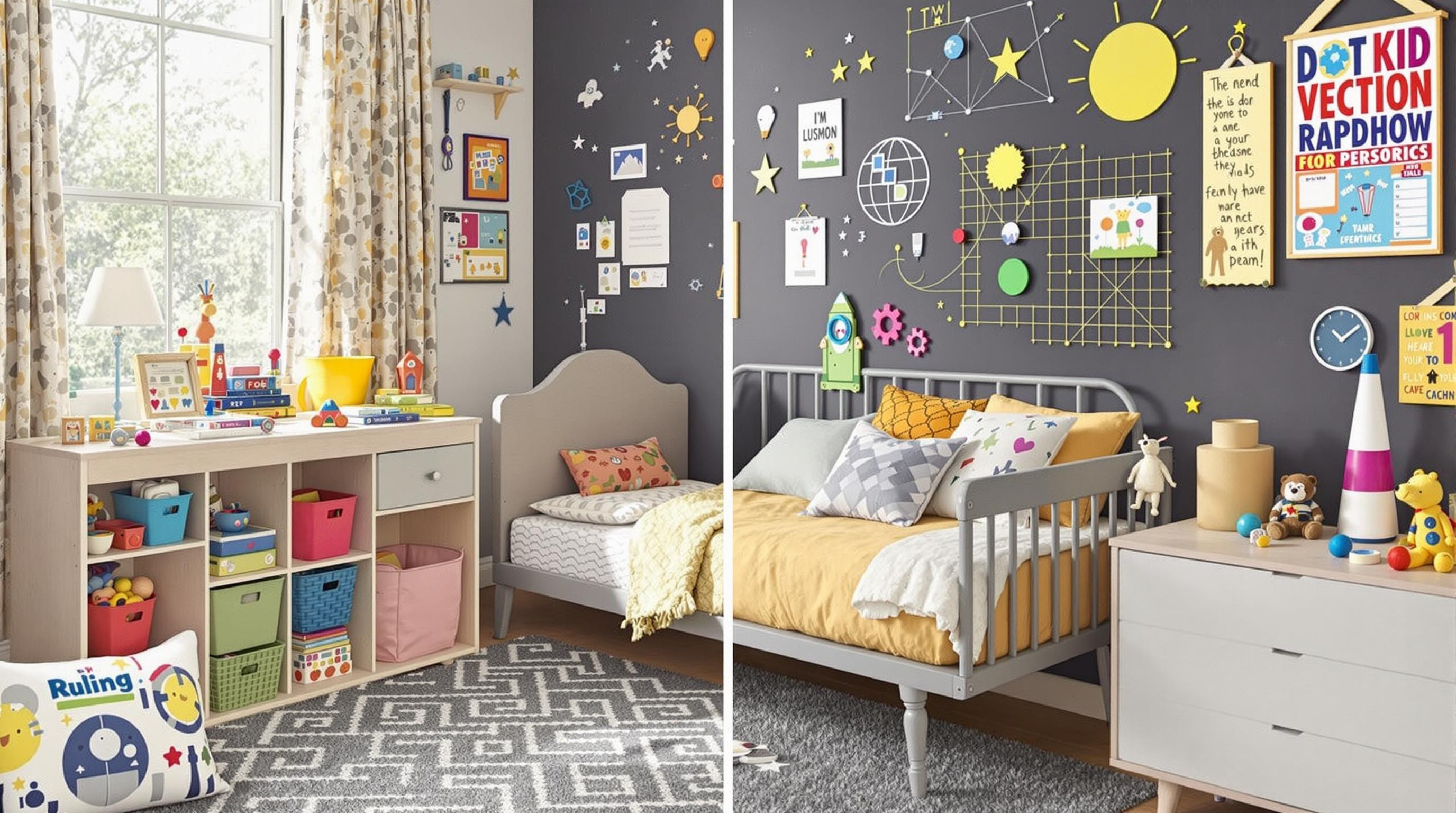
A small corner of the room can be transformed into a DIY science experiment station. This nook can include a small table with organizational storage for science tools, measuring cups, and colorful test tubes. You can decorate the space with framed pictures of famous scientists, adding a motivational touch.
Interactive elements, such as a chalkboard or a whiteboard for sketching experiments and recording observations, encourage hands-on learning. Kids can feel like real scientists as they execute their projects and show off their findings for friends and family. It's both a fun and educational setup that fits seamlessly into their decor.
Promoting experimental activities and involving children in the design of their station fosters enthusiasm for STEM learning. Displaying results or showcasing completed experiments can make them feel proud while inspiring creativity and critical thinking. Curiosity is the backbone of STEM, and this setup promotes it in a playful manner.
3. Tech-Themed Bedding
Another exciting way to embrace STEM in a child’s room is by choosing tech-themed bedding sets. Opt for designs representing computer programming languages, binary codes, or vibrant illustrations of robots. Such themes can pique interest in technology and coding among young minds.
To deepen the experience, bedding can be complemented with themed pillows shaped like gadgets or tech tools. These small touches create an immersive environment where children feel surrounded by the tech world. It helps them relate these themes to their hobbies or interests, be it gaming or robotics.
Additionally, involving kids in the selection of their bedding can empower them with ownership over their space. This way, they become active participants in their learning environment, which fosters a love for technology and innovation. Children surrounded by tech elements are more likely to embrace it as their potential career path.
4. Math Art Decor
For budding mathematicians, integrating math-themed art into room decor can be both appealing and educational. Create wall art that features geometric shapes, equations, or inspirational quotes from famous mathematicians. These artistic expressions can stimulate a child's interest in mathematics while enriching their visual space.
Consider displaying framed artwork alongside measuring tools or a clock designed to resemble mathematical symbols. These elements showcase the beauty of math in everyday life and demonstrate its relevance beyond textbooks. Engaging art can inspire kids to approach numbers with excitement rather than trepidation.
To make it even more interactive, create a "math wall" where children can add their work or collaborate on problems with siblings or friends. This participatory approach not only beautifies their space but also reinforces learning. By contextualizing math in a fun way, you're turning a possible anxiety-inducing subject into an enjoyable exploration zone.
5. Nature and Biology Themes
Encouraging a love of nature and biology can be done creatively through room decor that reflects life sciences. Opt for wall decals of plants, animals, and ecosystems, creating a mini-ecosystem within the room. This setup offers a vibrant and educational atmosphere that stimulates children's interest in exploration and discovery.
Consider introducing a small indoor plant or terrarium to teach responsibility and the basics of biology. Hands-on experiences are vital in development, as they provide ongoing lessons about ecosystems, photosynthesis, and even weather patterns. Furthermore, children learn about nurturing and responsibility through caring for living things.
Including educational bookshelves stocked with biology and nature-themed stories adds an additional layer of learning. Encourage storytelling sessions around this theme, where children can make connections between their decor and what they learn from books. Such an enriching environment fosters a deep passion for biology and an appreciation for the environment.
6. Engineering Play Zones
A designated engineering play zone can be developed in a child’s room for hands-on learning and creativity. Create a space filled with various building materials, including interlocking blocks, model kits, and building tools. A small workbench or table where kids can create their projects stimulates their engineering mindset and promotes problem-solving skills.
Decorate this area with posters featuring famous engineers or iconic inventions. This provides inspiration while showcasing the importance of engineering in everyday life. These visual cues help children to envision themselves as future creators and innovators, igniting their ambition in the engineering field.
Utilizing color-coded storage boxes for materials can keep this area organized while making it visually engaging. A creative zone where kids can stand, build, and test their designs helps reinforce fundamental engineering principles. Constructing a personal area based on creativity encourages critical thinking and the application of STEM concepts.
7. Interactive Tech Wall
Transform one wall of the room into an interactive tech wall using touch-screen boards or projectors displaying STEM learning apps. This high-tech decor not only serves as entertainment but offers educational value through engaging content. Kids can access countless resources that combine fun and learning in an exciting format.
Involving children in the selection of apps and themes can encourage a personalized experience that resonates with their interests. By creating a space that caters to their individual passions, you encourage them to engage with STEM while having fun. Technology becomes a partner in their journey of exploration and skills development.
Moreover, setting up scheduled activity times can instill discipline while enhancing their learning experience. When kids associate their bedroom with thrilling learning opportunities, it strengthens their connection to STEM subjects. The interactive tech wall can become a catalyst that informs, entertains, and cultivates top-notch learning experiences.
8. Science Publication Displays
Creating a display for science publications or favorite seasonal magazines centered around STEM topics can enhance the decoration of a child’s room. Frame covers or excerpts from magazines showcasing different scientific fields, from physics to environmental science, and hang them on the wall. This approach emphasizes the ongoing journey of knowledge acquisition.
Encourage children to contribute to this display by choosing articles that intrigue them. Conduct discussions about these topics to create deeper engagement with the material. This interaction can enhance reading comprehension skills while promoting critical thinking and analytical skills linked to various subject matters.
Incorporating a "reading corner" with bean bags or soft seating can make it a cozy spot for children to learn and explore those publications. By building an inviting environment around STEM-themed literature, you're fostering a growth mindset alongside a love for reading and research. These displays are reminders that knowledge is dynamic and continuously evolving.
9. Creative Craft Corner
Establishing a craft corner dedicated to STEM-related projects can be a hit for kids who love to create. Set up an area with art supplies, science kits, and building materials for continued exploration and invention. This dedicated craft space allows children to intertwine creativity with learning, where they can build structures or conduct experiments.
Incorporating craft elements that challenge them to use physics principles, like designing bridges or rockets, can make learning fun and engaging. By broadly defining 'crafts,' you're allowing for a variety of approaches, from simple art projects to complex engineering challenges. The hands-on learning nature of these crafts fosters a better understanding of fundamental concepts.
Additionally, displaying their completed projects within the craft corner encourages pride in their work and reinforces creativity. By giving children a space to express themselves while involving them in STEM, you support their growth and foster a passion for continuous learning and discovery. This creativity-centric approach broadens their understanding in a delightful way.
10. Themed Floor Rugs
Finally, incorporating themed floor rugs that reflect STEM concepts can add character while enhancing learning in a child’s room. Look for designs that illustrate the periodic table of elements, geometric shapes, or maps of the world. These functional pieces serve as a soft play area and provide visual learning cues.
Incorporating engaging elements into flooring encourages children to sit down and interact with what they see. When they play, they can learn concepts about chemistry, geography, and engineering right under their feet, creating a comfortable yet educational environment. Rug patterns can inspire playful discussions about the subject matter as children engage with other friends or siblings.
Moreover, selecting a versatile rug that complements the room’s color scheme can soften the space and make it lively. As children visually and physically interact with learning aids, their senses become alive. Themed floor rugs turn a simplistic decor element into an avenue for exploration and learning in a fun, relatable way.
Related Articles